

Strout Stories
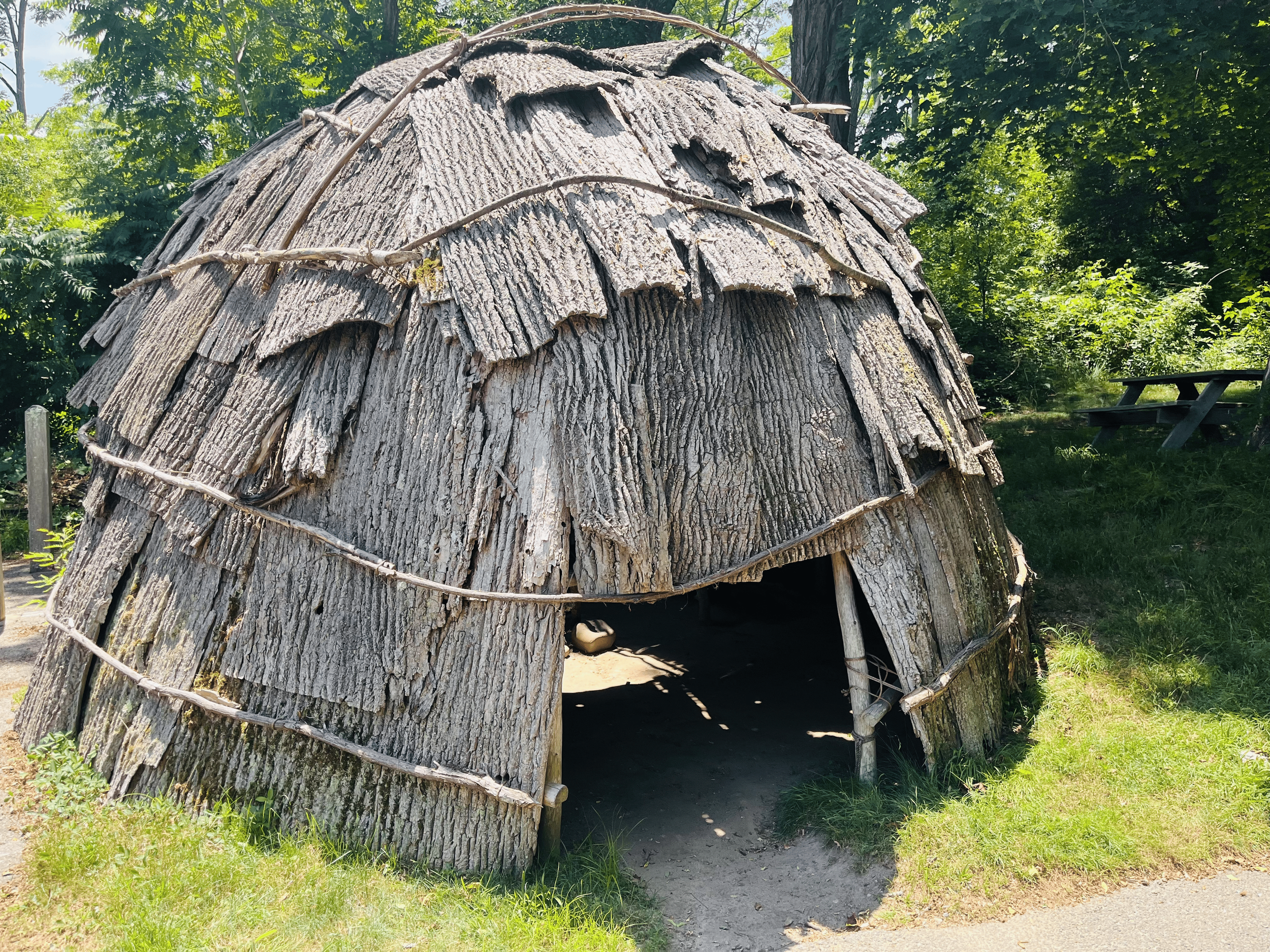
Wetu at the Mashpee-Wampanoag Museum in MA (photo by author, 2025)
I am a professional writer, not a professional historian. What you’ll find on Strout Stories are overviews of what I consider from my experience in journalism to be highly credible sources’ reporting of verifiable facts relevant to the Strout lineage. What you’ll also find is a point of view regarding these facts. I find it a highly agreeable one, and I hope you will, too, but you should know it from the top.
Strouts.org unequivocally condemns genocide and slavery, and those who actively took part in those practices, in all its forms. Strouts.org, like the U.S. Department of the Interior, Harvard College, the City of Boston and the towns of Marblehead and Truro, acknowledges that the Strout family name originated on the traditional and ancestral land of the Naumkeags and Wampanoags in Marblehead and Truro, Massachusetts, respectively.
Those tribes did not simply vanish from the area, nor did they consent to colonization. What follows is an unvarnished look at the events that led to this “New World” in which we have flourished, including acts of extreme cruelty and violence perpetrated by historical figures still revered today due to centuries of disinformation about America’s origin.
Our ears and minds are wide open to all feedback and criticism of Strout Origins Pt. 1 from the Native American community.
For all others, we welcome your Strout-related hints, links, nudges and files to help us keep chipping away at our American roots. Please also consider giving to the worthy Native American advocacy organization at the end of Origins Pt. 1 if you feel so moved by this narrative.
AUTHOR’S NOTE
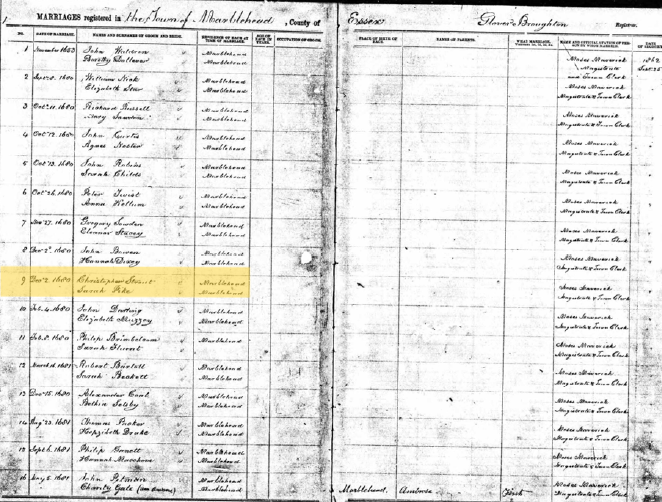
Marriage record of Christopher Strout and Sarah Pike, Marblehead, 1680
STROUT ORIGINS 101
There are no known records of Christopher Strout’s ancestors in England. He is believed to have been born in Truro, Cornwall around 1655.
Christopher Strout and Sarah Pike were married December 2, 1680[i], in Marblehead, a town in the Massachusetts Bay Colony known for its hard-bitten fishermen (Christopher’s likely occupation).
This is the first documented evidence of a Strout in America.
Some believe Sarah’s father was John Pike, Jr., “a man of considerable judicial acumen”[ii] back in England who had immigrated to New Jersey. Her brother, Major Zebulon Pike, and his son, General Zebulon, would make names for themselves in the Revolutionary War and the War of 1812.
In 2022, fellow family historian Steven Strout noted that the lack of evidence linking Sarah to this high-profile figure suggests that her real father was George Pike, “a man known to be living in Marblehead at the time Sarah marries.”
How Christopher Strout got to America, including rumors of a shipwreck, is not currently found in the evidentiary record. Around the window in which he most likely arrived – in the aftermath of King Philip’s War in the late-1670s – the Cape’s Province Lands and their brutal coastal conditions attracted younger adventure-seekers who didn’t mind occasionally mingling with pirates. Christopher and Sarah seem to have made a beeline for “Hell Town”[iii] after the wedding.
We will explore more of Christopher and Sarah’s world and legacy in Origins Pt. 2 – Cape Cod.
We will explore the much richer historical text of his children, who mostly left Massachusetts behind, in Origins Pt. 3 – Cape Elizabeth.
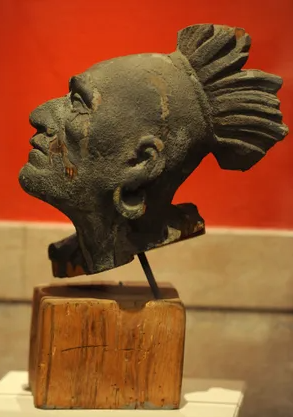
Bust of Tisquantum, the Wampanoag Odysseus
AMERICAN COLONIZATION
The Strout family was able to settle and flourish in the Massachusetts Bay Colony territories in early America as a direct consequence of the enslavement, debt peonage, land theft, family separation and genocide of Native Americans, especially the Wampanoags, Narragansetts and Pequots. This was done systematically, through legal and royal proclamations out of Plymouth, Boston and the English Crown, and continues today through state and federal Supreme Court decisions as recent as 2022 that have consistently nullified treaties[iv] and diminished tribal sovereignty.
This English operation began in 1614 when Captain Thomas Hunt anchored at the future Plymouth Rock site and invited Wampanoags onboard to trade goods.[v] It was a trap. He and his men captured 20 Wampanoags there including the American Odysseus, Tisquantum (Squanto to the English), then snatched another seven Wampanoag men from the future site of Eastham - the Strout family’s first American home - and sold them into slavery in Spain.
In the subsequent years, prior to the arrival of the Mayflower, diseases introduced by extended contact with Europeans decimated the Native population by anywhere from 70%-90% in the Northeast Woodlands. As historian Francis Jennings has put it, the Pilgrims landed not in a virgin land but a widowed land.[vi] For generations, some Natives - including their first friends, the Wampanoags - equated gunpowder with plague.
The “success” of the Jamestown colony, whose capture of a teenaged Pocahontas in 1614 captivated British audiences, along with the colonies’ 1619 formulation of a uniquely cruel chattel slavery system that enshrined race-based, inherited, lifetime servitude into law[vii], led thousands of other English strivers to colonize their way to their own American Dreams, triggering what is known as the Great Migration over the next several decades.
That included the passengers of the Mayflower and settlers of Plymouth Colony, some of whom the Strout family is genetically entwined.
Ch. 1 SOURCES:
[i] Torrey, C. A., Bentley, E. P. (1985). New England marriages prior to 1700. United States: Genealogical Publishing Company.
[ii] Miller, G. J. (2013). Ye Olde Middlesex Courts: The Establishment of an Early Court System in One of the Original Counties of New Jersey. United States: Heritage Books.
[iii] Vorse, M. H. (1991). Time and the Town: A Provincetown Chronicle. United States: Rutgers University Press.
[iv] Bushnell, D. (1953). The Treatment of the Indians in Plymouth Colony. New England Quarterly, 193-218.
[v] Turner, J. G. (2020). The Yoke of Bondage: Slavery in Plymouth Colony. The New England Quarterly, 93(4), 634-654.
[vi] Jennings, F. (1971). Virgin land and savage people. American Quarterly, 23(4), 519-541.
[vii] LaVeist TA, Fullilove M, Fullilove R. 400 Years of Inequality Since Jamestown of 1619. Am J Public Health. 2019 Jan;109(1):83-84.